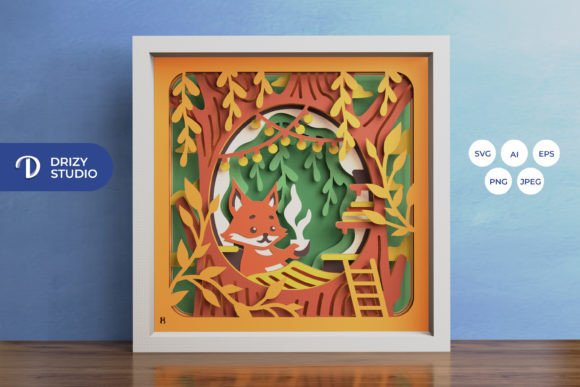
Fox Life Inside a Tree 3D SVG for Shadow Boxes
Evaluating the Asset for Commercial Digital Product Sales
As a digital product creator managing multiple storefronts on Etsy and Creative Fabrica, I approach every new graphic design asset with a critical eye toward profitability and production efficiency. When evaluating the Fox Life Inside a Tree 3D Layered Paper template, my primary focus is not just on its aesthetic charm, but on its viability as a commercial design foundation for sellable goods. This specific illustration captures a distinct woodland nursery niche that performs consistently well in Q3 and Q4. The mood strikes a balance between whimsical and sophisticated, avoiding the overly cartoonish look that can sometimes limit price points. For sellers targeting the handmade business sector or parents decorating gender-neutral nurseries, this visual personality suggests a premium perception. It feels like an heirloom piece rather than a disposable craft, which is essential when positioning printable design files at a higher value tier.
From a technical standpoint, the layered nature of this file offers unique opportunities beyond standard flat graphics. However, before listing this as a digital download, I must verify that the vector nodes are clean and that the layering logic makes sense for end-users. A beautiful preview image means nothing if the customer cannot assemble the physical shadow box without frustration. My evaluation process involves testing the file's integrity to ensure it supports both professional makers and hobbyist Cricut users equally.
Expanding Beyond Shadow Boxes into Diverse Revenue Streams
While the core product is clearly a 3D SVG intended for light boxes, relying on a single use case limits revenue potential. In my shop, I test how assets translate across different mediums to maximize return on investment. The Fox Life Inside a Tree concept has strong adaptability for various product types. As a sublimation design, the intricate layers can be flattened and recolored to create high-margin tumbler wraps or mug designs. The depth inherent in the original layered art translates beautifully to simulated 3D effects on ceramic and metal surfaces, giving print-on-demand products a custom, artistic feel that stands out against generic clipart.
For the paper crafting community, this asset serves as an excellent base for greeting cards and invitation templates. I have found that separating the individual layers allows for the creation of modular sticker design packs. The fox character, isolated from the tree background, works perfectly as a planner sticker or scrapbooking embellishment. Additionally, Canva template sellers can utilize the PNG design elements to build social media graphics for autumn-themed promotions or baby shower announcements. By breaking the main composition down into versatile components, one graphic design asset becomes a comprehensive design bundle, appealing to a wider range of creative entrepreneurs and small business branding projects.
Optimizing Listing Images and Visual Hierarchy
In the competitive landscape of creative marketplace listings, your thumbnail determines your click-through rate. The Fox Life Inside a Tree 3D Layered Paper excels in product presentation because of its built-in depth. When creating mockup previews, lighting is everything. I recommend rendering the digital file with soft, directional shadows to emphasize the 3D aspect without obscuring details. This visual hierarchy guides the buyer’s eye through the layers, instantly communicating the value of the SVG design. Flat, unlit renders often fail to convey the magic of a shadow box, so investing time in realistic visualization is non-negotiable.
This asset also supports brand identity consistency. If your shop focuses on forest themes or cottagecore aesthetics, this illustration anchors your collection. Use it as a hero image in seasonal bundles to tie together disparate items like digital paper packs and wall art. The cohesive visual storytelling builds customer trust and encourages multi-item purchases. Furthermore, showing the assembled physical result alongside the digital file screenshot bridges the gap between expectation and reality, reducing pre-sale questions and post-purchase support tickets.
Technical Constraints and Production Safety Checks
Despite its versatility, there are specific scenarios where this asset requires careful handling. The intricate cuts necessary for a quality 3D light box can become problematic when scaled down for tiny sticker details or complex layouts on dark backgrounds. Fine lines that look elegant in a 12-inch shadow box may tear when cut on vinyl or fail to print clearly on low-resolution merchandise. Always test the minimum viable size before offering scaled variations. Weak contrast is another risk; if the layers rely solely on color differentiation without sufficient stroke definition, the design may get lost in crowded thumbnails or when printed on textured cardstock.
Sellers must also be vigilant about file organization. Customers expect clearly labeled layers (e.g., "Background," "Mid-Ground Trees," "Fox," "Foreground"). Ambiguous naming conventions lead to negative reviews. Verify PNG transparency edges to prevent white halos around elements when used in Canva templates. Most importantly, confirm the commercial license terms before incorporating this into finished products for sale. Understanding whether you can sell the physical assembly versus the digital file protects your business from legal issues. These due diligence steps separate amateur uploads from professional digital product offerings.
Practical Seller Notes for Market Success
To ensure this asset performs well in a real-world shop environment, follow these practical testing protocols before publishing:
- Mockup Validation: Test the design on both white and dark background mockups to ensure visibility across different listing styles.
- Cut File Testing: Run a physical test cut on 65lb and 80lb cardstock to verify that bridge connections hold and weeding is manageable for Cricut project users.
- Typography Pairing: Experiment with serif fonts for a classic storybook look, handwritten fonts for nursery personalization, and sans serif options for modern minimalism to see which style resonates with your audience.
- Color Calibration: Print a test sheet to check color accuracy, as screen-to-print variance can affect the perceived depth of the layered paper effect.
- File Resolution Check: Ensure all raster exports are at least 300 DPI for printable wall art applications to maintain crisp edges.
- Bundle Strategy: Consider pairing this fox illustration with complementary mushroom or pinecone assets to increase the perceived value of the design bundle.
- Keyword Alignment: Update tags to include specific long-tail terms like "woodland nursery decor" or "layered papercut template" rather than just generic "fox svg."
By treating the Fox Life Inside a Tree 3D Layered Paper as a foundational business asset rather than just a pretty picture, sellers can unlock sustainable revenue streams. Whether utilized for high-ticket physical shadow boxes or volume-based digital downloads, success lies in rigorous testing and strategic application. The goal is to provide a seamless experience for the end-user while building a reputable, profitable brand in the digital design space. Taking the time to validate cut quality, optimize presentation, and diversify application ensures that this charming woodland scene translates into tangible sales results for your online business.