Mother Love Story 3D Shadow Box: A Maker’s Review
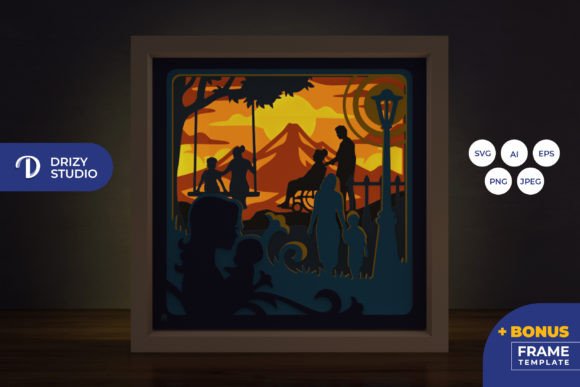
As a designer who constantly bridges the gap between digital assets and tangible, stitched goods, I approach every new file with a healthy dose of skepticism. We have all downloaded beautiful previews that turn into thread nests or visual mud once they hit the hoop. When I first examined the Mother Love Story 3D Shadow Box, my immediate focus was on its translation potential. While this asset is categorized as a layered paper-cutting template and a 3D SVG for shadow boxes, my mind immediately went to how these distinct layers could inform a structured machine embroidery design. The silhouette of a mother with her son offers a timeless emotional hook, but for those of us running a craft business or managing an Etsy shop, emotion must be backed by technical viability.
Translating Paper Layers to Stitched Texture
The first impression of the Mother Love Story 3D Shadow Box is one of delicate intimacy. The square format provides a balanced canvas that feels intentional rather than cropped. For an embroidery project, this geometry is excellent because it maximizes hoop space without wasting stabilizer. However, because this originates as a paper-cut template, the lines are likely optimized for laser cutters or craft knives, not needles. This distinction matters immensely.
In a real-world scenario, I envision adapting this aesthetic for a premium personalized gift, such as a nursery wall hanging or a high-end tote bag. The "shadow box" concept implies depth. In embroidery, we achieve this through stitch density and layering rather than physical spacers. If you are converting this visual style into a digital embroidery file, you must decide whether to mimic the paper look with flat satin stitches or embrace the dimension with puff foam or textured fill stitches. The clean lines of the mother-and-son silhouette suggest that a combination of running stitch outlines and smooth fill areas would best honor the original design's intent while ensuring the finished product looks professional rather than like a direct, unedited port.
Real-World Application: The Custom Sweatshirt Test
Let’s apply this to a specific case study. I recently had a client request a custom apparel piece for a Mother’s Day boutique collection. They wanted something that felt modern yet sentimental. The Mother Love Story 3D Shadow Box motif fits this brief perfectly, but sweatshirt embroidery presents unique challenges. Fleece and French terry fabrics have texture and stretch that can distort fine details.
If I were using this design concept for a sweatshirt embroidery run, I would treat the square border as a guide for placement rather than a rigid stitch line. Heavy borders on stretchy fabric can cause puckering. Instead, I might use the inner mother-and-son element as a standalone applique design or a dense center piece. This adaptation maintains the emotional resonance of the original 3D SVG while respecting the limitations of the garment. For Etsy sellers, this kind of thoughtful adaptation is what separates a generic listing from a bestseller. Customers can tell when a design has been engineered for the specific fabric texture it lives on. Using this motif on a structured item like a canvas tote bag design or a framed textile art piece might actually be closer to the original shadow box vision, allowing for higher detail retention and crisper edges than knitwear permits.
Technical Considerations for Small Business Owners
For fellow creative entrepreneurs and handmade shop owners, technical due diligence is non-negotiable. Because the Mother Love Story 3D Shadow Box is described as a paper-cutting template, you must verify its compatibility before attempting to stitch it. Not all vector files convert cleanly to embroidery formats. You need to check if the curves are smooth enough for a satin stitch or if they require manual node editing to prevent jagged edges.
Furthermore, consider the hoop size. Square designs are efficient, but ensure your machine’s maximum stitching area accommodates the full layout plus adequate margin for stabilization. If you are planning to sell this as part of a commercial embroidery lineup, test the design on scrap fabric identical to your final product. Check the stitch density; paper-cut styles often feature intricate internal cutouts that, when stitched, can become bulletproof patches of thread if not properly digitized with underlay and compensation. A dense design on a lightweight baby onesie will ruin the drape of the garment, whereas the same design on a heavy denim jacket might disappear. Always match the design weight to the substrate.
Visual Appeal and Marketability
Beyond the mechanics, we must discuss market fit. The mother-and-son theme is evergreen, but the "3D Shadow Box" styling gives it a contemporary edge that distinguishes it from standard clip-art style baby embroidery. This visual personality increases perceived value. When creating printable mockups for your online store, emphasize the layered nature of the design. Even if the final embroidered version is flat, the association with 3D paper art suggests craftsmanship and complexity.
However, be cautious with color choices. Paper cuts rely on shadows for definition; embroidery relies on thread contrast. If you stitch white-on-white to mimic paper, you risk losing the design entirely in photos. For holiday embroidery or seasonal merchandise, consider using tonal threads that provide just enough contrast to define the layers without sacrificing the soft, matte aesthetic of the original inspiration. This attention to visual clarity directly impacts buyer engagement and trust. A customer needs to see exactly what they are buying, and a well-executed adaptation of the Mother Love Story 3D Shadow Box communicates professionalism.
Designer Notes for Safe Execution
Before you commit this design to a commercial run or a cherished handmade product, adhere to these practical guidelines:
- Verify Licensing: Since this is a 3D SVG/paper template, confirm explicitly whether the license covers derivative embroidery works for commercial sale. Do not assume digital purchase equals embroidery resale rights.
- Test on Target Fabric: Never skip the test stitch-out. What works on cotton twill may fail on minky or performance wear. Evaluate the stabilizer choice based on the test results.
- Check Detail Integrity: Inspect small elements like fingers or facial features. In paper cutting, these are simple vectors; in embroidery, they are complex stitch sequences. Simplify if necessary to maintain clarity at smaller sizes.
- Mockup Realistically: Use black and white mockups to test contrast. If the design vanishes in grayscale, it needs more definition or better thread colors.
- Respect the Medium: If the file is strictly for paper crafting, do not force it into embroidery software without significant redigitizing. It is often better to use the Mother Love Story 3D Shadow Box as visual inspiration for a custom embroidered patch or digitized artwork rather than risking a poor auto-digitize result.
Ultimately, the Mother Love Story 3D Shadow Box represents a beautiful intersection of digital craft and traditional sentiment. Whether you are using it to create layered paper art or adapting its soulful aesthetic for custom apparel and nursery decor, success lies in respecting the material constraints. By approaching this design with a maker’s eye and a business owner’s pragmatism, you can transform a digital template into a tangible heirloom that resonates deeply with your customers.